
How SIPs Build Wealth: A Beginner-Friendly Guide to Mutual Funds in India
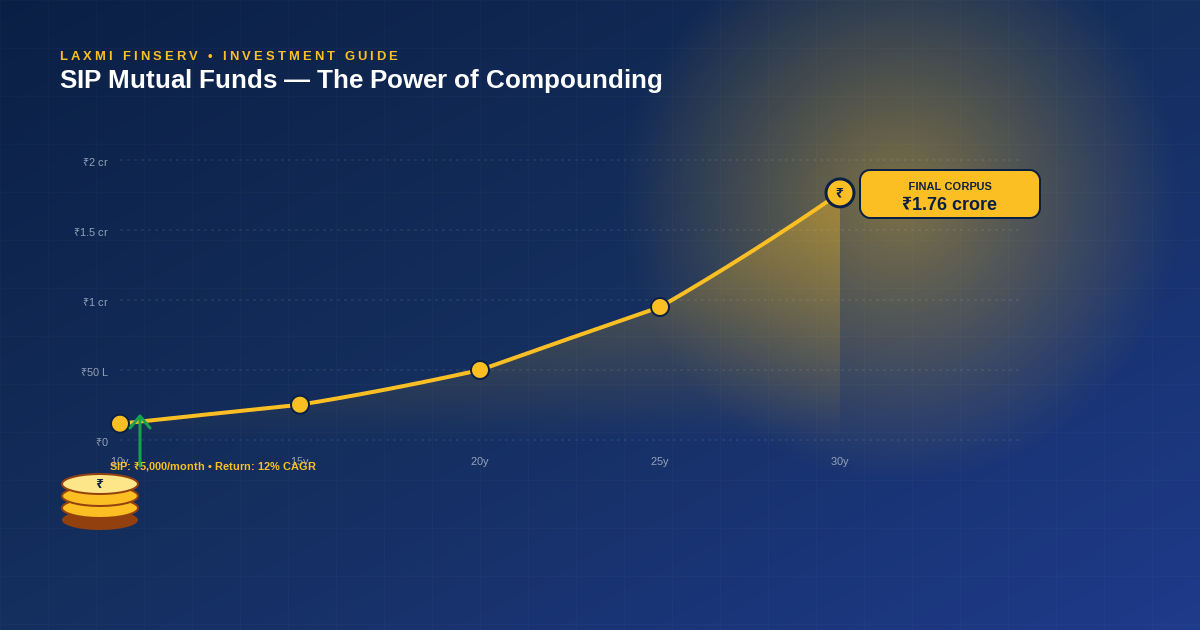
If you have ever heard the phrase "₹5,000 a month for 20 years can become ₹50 lakh", that's the magic of a Systematic Investment Plan, or SIP. It is the single most accessible wealth-building tool ever made for Indian retail investors — and yet, fewer than 5% of households in India use it consistently.
This guide explains exactly how SIPs work, why they're so powerful, and how to start one without making the rookie mistakes that wipe out the gains.
What Is A SIP, Really?
A SIP is just a standing instruction to your bank to debit a fixed amount (say ₹2,000) on a fixed date (say the 5th of every month) and invest it automatically into a mutual fund of your choice.
That's it. There's no magic. The "magic" comes from three forces that SIPs harness:
- Discipline — automation removes the emotional "should I invest this month?" question.
- Rupee-cost averaging — you buy more units when markets are down, fewer when they're up. Over time, your average cost drops.
- Compounding — your returns earn returns, and those earn returns. The curve goes vertical in years 15-25.
The Compounding Reality — Numbers You Can't Ignore
Here's what a ₹5,000/month SIP looks like at a 12% expected return (typical of equity mutual funds over long periods):
| Duration | Total Invested | Final Value | Wealth Gained |
|---|---|---|---|
| 10 years | ₹6,00,000 | ₹11,61,695 | ₹5,61,695 |
| 15 years | ₹9,00,000 | ₹25,22,880 | ₹16,22,880 |
| 20 years | ₹12,00,000 | ₹49,95,740 | ₹37,95,740 |
| 25 years | ₹15,00,000 | ₹94,88,200 | ₹79,88,200 |
| 30 years | ₹18,00,000 | ₹1,76,49,569 | ₹1,58,49,569 |
Notice how the gains explode after year 20? That's compounding doing its work. The longer you stay, the more disproportionate the returns become.
Types of Mutual Funds You Can SIP Into
- Large-cap funds — invest in India's top 100 companies. Lower volatility, 10–12% long-term returns.
- Mid & small-cap funds — higher growth potential but more volatile. Suitable for 10+ year horizons.
- Flexi-cap / Multi-cap funds — fund manager allocates across all market caps. Good "default" choice for beginners.
- ELSS funds — equity funds with a 3-year lock-in that also save you tax under Section 80C.
- Index funds — passively track an index like Nifty 50. Low expense ratio (around 0.2%), perfect for hands-off investors.
- Debt funds — lower risk, lower return, suitable for short-term goals (1-3 years).
How Much Should You SIP?
A simple framework: save at least 20% of your monthly income, with at least half of that going into equity SIPs. So if you earn ₹50,000/month, target a ₹5,000+ SIP into a diversified equity fund.
Increase your SIP by 10% every year (the "step-up SIP" feature most platforms now offer). A ₹5,000 SIP that grows by 10% annually for 25 years becomes a final corpus of ₹2.5 crore+ — almost triple a flat ₹5,000 SIP.
5 Mistakes That Quietly Kill SIP Returns
- Stopping the SIP when markets crash. That's exactly when you should be buying more. Falling markets give you cheaper units.
- Switching funds every year. Equity funds need 7+ years to show their best performance. Frequent switching = exit loads + capital gains tax + missed runs.
- Picking yesterday's winners. The fund that topped the charts last year often doesn't repeat. Look at 5- and 10-year consistency, not 1-year.
- Investing in too many funds. 3-4 well-chosen funds covering large + flexi + small cap is enough. Beyond that, you're just duplicating exposure.
- Ignoring goal-mapping. Each SIP should be tied to a specific goal (retirement, child's education, home down payment) so you know when to redeem.
How to Actually Start
- Complete your KYC (Aadhaar + PAN) — done online in 10 minutes.
- Open an account with a direct mutual fund platform (Zerodha Coin, Groww, Kuvera, ETMoney) or your AMFI Registered Distributor.
- Start small — even ₹500/month is fine. The habit matters more than the amount.
- Set a step-up of 10% per year and a clear goal date.
- Review once a year — not once a week.
Want a personalized SIP plan based on your income, goals, and risk profile? Talk to our AMFI-registered advisor for a free consultation. We will help you choose the right 3–4 funds, set realistic targets, and avoid the common mistakes that derail most beginners.